If you want to know which aftermarket car stereo brands are actually worth buying, this guide breaks down the six that matter and tells you what each one is genuinely good at. The goal here is simple: help you pick a head unit brand that fits your budget, your dash, and the features you care about, without the marketing gloss.
What follows draws on manufacturer specifications, independent tests and owner reports from everything from work trucks to project cars, rather than on spec sheets alone. Aftermarket head units have converged a lot in the last few generations. Bluetooth, USB, and phone mirroring are close to universal now, so the real differences show up in the interface, the tuner quality, the build, and how the brand behaves once the unit is out of the box and under a dash light.
The aftermarket head unit brands that matter
There are dozens of names selling car stereos, but the field narrows fast once you filter for units you can actually service, get firmware for, and trust for more than a couple of years. Six brands cover almost every real buying decision: Pioneer, Kenwood, Sony, Alpine, JVC, and the budget tier led by Boss and Sound Storm. Everything else is either a rebrand, a no-name import, or a niche high-end shop that most people never need.
Below is the short version. The rest of the article explains the reasoning behind each verdict.
Car stereo brand comparison
| Brand | Known for | Price tier | Best for | Verdict |
|---|---|---|---|---|
| Pioneer | Deep feature set, strong wireless CarPlay and Android Auto | Mid to high | People who want the most capable interface | The safe default pick |
| Kenwood | Clean menus, reliable Bluetooth, solid value | Mid | Daily drivers who want no fuss | The easiest to live with |
| Sony | Bright displays, decent onboard tuning, tidy design | Low to mid | Simple upgrades on a budget | Good value, thinner features |
| Alpine | Sound quality, tuning depth, premium builds | High | Enthusiasts building a real system | Best for sound-first builds |
| JVC | Affordable features, customizable lighting | Low to mid | Budget buyers who still want extras | Strong feature-per-dollar |
| Boss / Sound Storm | Rock-bottom pricing, basic playback | Budget | Beaters, spares, tight budgets | Buy with expectations set |
Pioneer
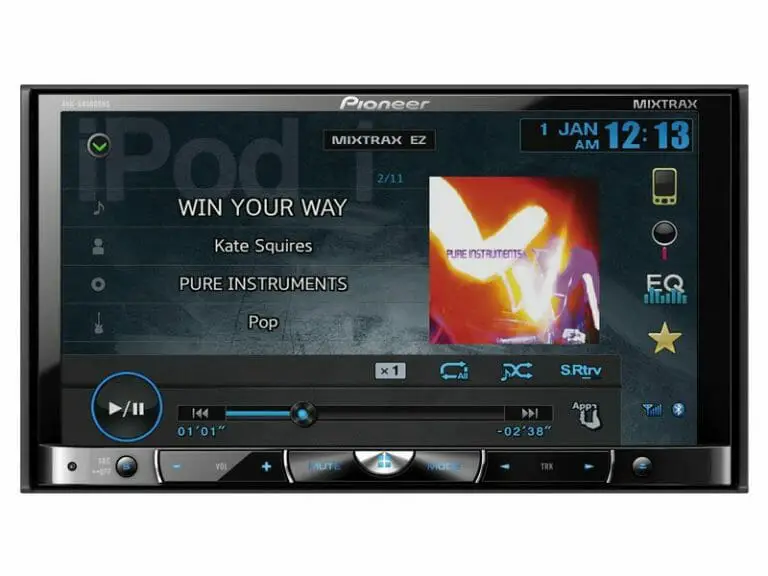
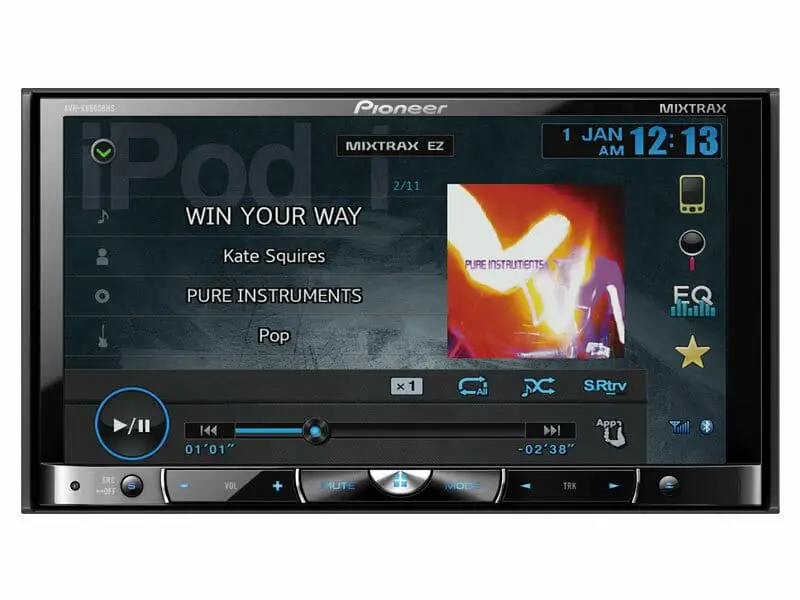
Pioneer is the brand I recommend when someone has no strong preference and just wants a head unit that does everything well. Their DMH and AVH lines have the most complete feature sets in the mainstream market, and their implementation of wireless CarPlay and Android Auto is consistently among the most stable. The touchscreens respond quickly, the menus are logical, and the built-in equalizer gives you enough control to tune a modest system without adding an outboard processor.
The tradeoff is that Pioneer’s range is huge and the naming is confusing. Two units that look similar can differ on whether the phone mirroring is wired or wireless, whether there’s a physical volume knob, and how deep the audio adjustments go. Read the model details carefully before buying, because the branding alone won’t tell you.
Pioneer pros and cons
- Strong: broad feature set, reliable wireless phone integration, responsive screens, deep-enough EQ for most builds.
- Weak: confusing model lineup, higher price at the top end, some floating-screen units are physically large behind the dash.
Kenwood
Kenwood is the brand we recommend to people who don’t want to think about their stereo after install day. The interface is clean, the Bluetooth pairing is dependable, and the units generally do exactly what they claim without quirks. Their eXcelon sub-line steps up the build quality and audio tuning if you want a little more, but even the standard models are dependable daily drivers.
Kenwood doesn’t chase the flashiest feature list, and that’s part of why it works. You give up some of the deep customization Pioneer and Alpine offer, but you get a unit that pairs on the first try every cold morning. For most commuters that trade is worth it.
Kenwood pros and cons
- Strong: consistent Bluetooth, clean menus, good value, reliable long term.
- Weak: fewer advanced tuning options than the enthusiast brands, styling is conservative.
Sony
Sony sits in the value lane with a design sensibility that shows. Their displays are bright and readable, the physical controls feel decent, and the units look tidy in a modern dash. Onboard sound tuning is better than you’d expect at the price, and their DSX and XAV lines cover both screenless and touchscreen buyers.
Where Sony gives ground is feature depth. You’ll find fewer preamp outputs, shallower EQ, and less expansion room than a comparable Pioneer or Alpine. For a clean, straightforward upgrade that looks good and sounds fine, that’s not a problem. For a system you plan to grow, it can be a ceiling.
Sony pros and cons
- Strong: bright displays, clean design, good value, better-than-expected onboard tuning.
- Weak: thinner feature set, limited expansion, fewer preamp outputs on lower models.
Alpine
Alpine is the brand for people who care about sound first. Their tuning options go deeper than the mainstream field, the preamp outputs are cleaner, and the build quality feels like it belongs in a system with amps and a processor behind it. If you’re planning to add separates, an amplifier, and a sub and actually tune the result, Alpine gives you the controls to do it right.
The catch is price and, occasionally, feature timing. Alpine costs more than the mid-tier brands, and they sometimes lag on rolling out the newest interface features because they prioritize audio behavior over novelty. If sound quality isn’t your top priority, you may be paying for headroom you won’t use.
Alpine pros and cons
- Strong: best-in-class tuning depth, clean preouts, premium build, ideal for full-system builds.
- Weak: highest price of the mainstream group, occasionally slower on new interface features.
JVC
JVC delivers a lot of feature for the money. Their KW and KD lines routinely include Bluetooth, USB, phone mirroring, and customizable illumination at prices below the mid-tier brands. If you want extras like adjustable lighting to match your dash and don’t want to spend Alpine money, JVC is a smart place to look.
The honest weakness is screen quality on some models. In direct sunlight a few JVC displays wash out more than I’d like, and the build feels a step lighter than Kenwood or Alpine. For the price that’s a fair trade, but go in knowing the screen is where corners get cut.
JVC pros and cons
- Strong: strong feature-per-dollar, customizable lighting, good budget phone integration.
- Weak: some displays wash out in bright sun, lighter build than premium brands.
Boss and the Sound Storm budget tier
Boss Audio and its Sound Storm line live at the bottom of the price ladder, and they’re honest about it. These units cover the basics: Bluetooth, USB, a screen on some models, and enough playback to get music out of your speakers. For a beater, a spare, a project you’re not sure you’ll finish, or a genuinely tight budget, they do the job.
What you give up is refinement and longevity. The tuners are weaker, the Bluetooth can be temperamental, the touchscreens feel cheap, and the units don’t tend to last as long as the mid-tier brands. I don’t steer people away from this tier, but I set expectations: you’re buying function, not finesse.
Boss / Sound Storm pros and cons
- Strong: lowest prices, covers the basic features, fine for low-stakes cars.
- Weak: weaker tuners and Bluetooth, cheaper screens, shorter lifespan.
How to choose a head unit brand
Brand reputation is a starting point, not a decision. Once you’ve narrowed to two or three brands, the actual model choice comes down to a few concrete factors. Work through these before you buy.
CarPlay and Android Auto
If phone mirroring matters to you, decide whether you want wired or wireless before anything else. Wireless CarPlay and Android Auto are convenient but add cost and, on cheaper units, occasional connection drops. Pioneer and Kenwood have the most reliable wireless implementations, according to owner reports. If you’re fine plugging in a cable, wired mirroring is cheaper and more stable across every brand.
DIN size
Your dash dictates this more than your preference. Single-DIN is the smaller slot, roughly two inches tall; double-DIN is twice that and fits the large touchscreen units. Measure your opening before you shop. If your car only takes single-DIN, a floating-screen unit can give you a big display in a small slot, but check the depth behind the dash so the chassis actually clears. Our guides to the best double-DIN head units with CarPlay and the best single-DIN head units cover the standout models in each size.
Features that actually matter
Ignore the feature list and focus on what you’ll use. A physical volume knob is worth more than a spec sheet suggests. Preamp outputs matter if you plan to add an amp. Steering-wheel control retention keeps your factory buttons working. A backup-camera input is worth having even if you don’t have a camera yet. Onboard EQ depth matters if you care about tuning. Everything else is nice to have.
Budget honestly
Match the head unit to the rest of the system. A high-end Alpine wired into worn factory speakers won’t sound like the price tag suggests. If you’re upgrading the whole car, the head unit is one line item; pair it with a look at the best car speakers so the money lands where you’ll hear it. And whichever brand you pick, factor in the install. Our guide to installing a car stereo walks through the harness, dash kit, and antenna adapter you’ll likely need.
Frequently asked questions
Which car stereo brand is the most reliable?
Kenwood and Pioneer are the two I trust most for long-term reliability in the mainstream market. Both pair consistently, hold up to daily use, and get firmware support. Alpine is equally reliable but costs more, and its strength is sound rather than simplicity.
Are aftermarket head units better than factory stereos?
For features and flexibility, yes. Aftermarket units add modern Bluetooth, phone mirroring, USB, and real preamp outputs that most factory systems lack. Newer factory systems tie into vehicle functions like climate and settings, so on some cars swapping the head unit means adding an interface adapter to keep those working. Check that before you commit.
What’s the difference between single-DIN and double-DIN?
DIN is the size of the slot in your dash. Single-DIN is about two inches tall and fits smaller units, often with a fold-out or floating screen. Double-DIN is twice as tall and fits the large fixed touchscreens. Your dash decides which you can use, so measure before you shop.
Do I need wireless CarPlay or is wired fine?
Wired is fine for most people and costs less. Wireless is more convenient, especially if you never take your phone out of your pocket, but it adds cost and can occasionally drop the connection on cheaper units. If you want wireless, owner reports and independent reviews point to Pioneer and Kenwood.
Which brand is best on a tight budget?
JVC gives the most feature per dollar in the low-to-mid range, with phone mirroring and extras like adjustable lighting at a fair price. If your budget is rock-bottom, Boss or Sound Storm will get music playing, just with weaker tuners and cheaper screens. Set expectations accordingly.
Will an aftermarket stereo keep my steering-wheel controls?
Usually, yes, but not automatically. Retaining steering-wheel controls takes a wiring interface or an adapter matched to your car, and sometimes a quick programming step during install. Most mainstream brands support it; confirm the right adapter for your vehicle before you buy the head unit.
The short answer
If you want one recommendation, Pioneer is the safe default and Kenwood is the easiest to live with. Go Alpine if sound quality is your priority and you’re building a real system, JVC if you want the most features for the least money, Sony for a clean simple upgrade, and Boss or Sound Storm only when the budget leaves no other option. Measure your dash, decide on wired versus wireless, and match the head unit to the speakers and amp you actually plan to run. Get those three right and any of these brands will serve you well.
About this guide
RideBass Team
Researched from manufacturer specifications, independent tests and owner reports, and edited for accuracy by the RideBass team.