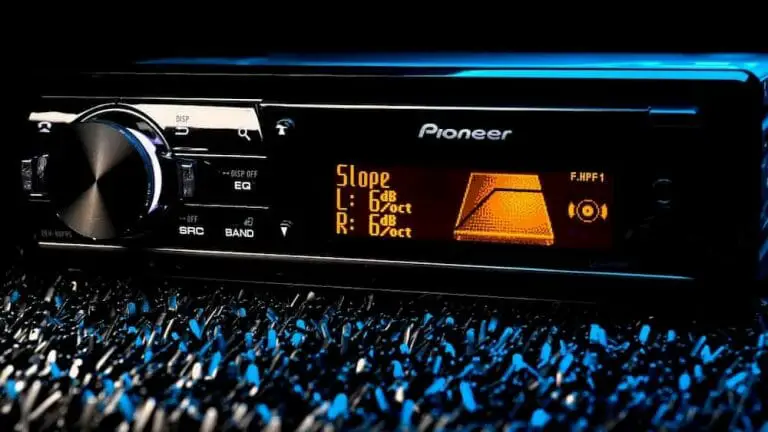
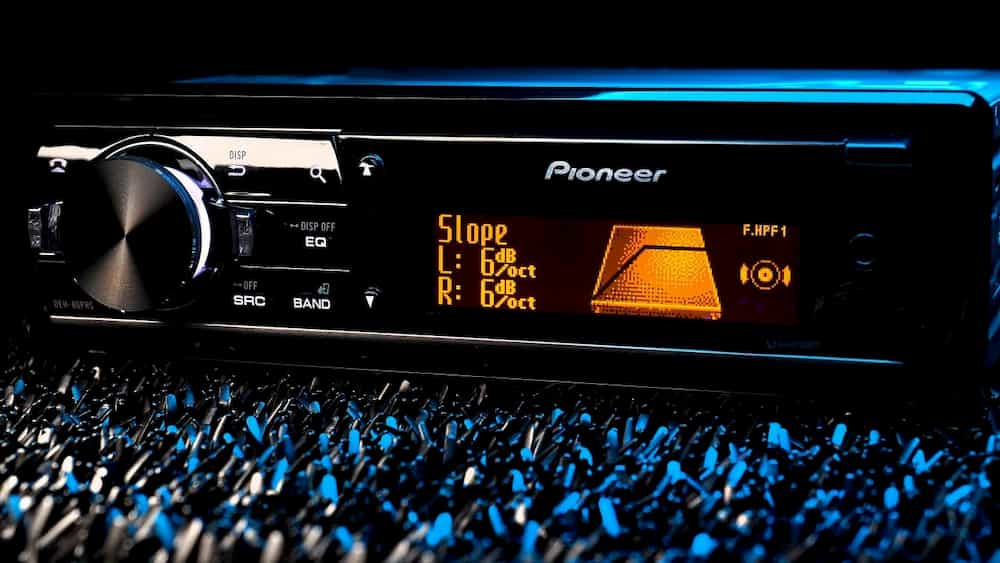
Pioneer DEH-80PRS Review: The Single-DIN Tuner That Still Owns Sound Quality
The Pioneer DEH-80PRS is a single-DIN CD receiver built around one goal, and it hits it: it gives you a full three-way active crossover, three pairs of high-voltage preouts, and auto time alignment in a chassis the size of an old cassette deck, which is why it remains one of the most respected sound-quality head units ever made. It is discontinued, it has no touchscreen and no CarPlay, and if you want a tuner that turns a set of amps and speakers into a properly staged system, it is still worth chasing down in 2026.
It is still a strong choice when you want real signal processing at the head unit instead of an extra black box in the trunk. This review covers what the DEH-80PRS actually does, who it is for, and where its age shows.
Verdict Up Front
If you care about staging, tuning, and running an active front stage off the head unit, the DEH-80PRS is a benchmark. It was Pioneer’s top single-DIN sound-quality tuner, and the DSP feature set it packed in is still more than most modern units bother to include. The catch is the era it comes from: it is a CD-based deck with a small monochrome display, no smartphone-native interface, and no CarPlay or Android Auto. Buy it for the sound processing, not for the dashboard experience.
Pioneer DEH-80PRS Specs
These are the real, published specs from Pioneer’s own documentation. Where the commonly quoted numbers online disagree with the spec sheet, I have flagged it honestly instead of repeating the marketing.
| Feature | Specification |
|---|---|
| Chassis | Single-DIN, in-dash |
| Primary source | CD (CD-R/RW), plus USB, AUX, SD card |
| Display | Monochrome OEL text display, no touchscreen |
| Preouts | 3 pairs, high-voltage 5V (front, rear, sub) |
| Crossover | Built-in 3-way active digital crossover network |
| Graphic EQ | Dual (independent L/R) graphic EQ. Pioneer’s spec sheet lists a 16-band GEQ; a 31-band figure is sometimes quoted online but I could not confirm 31 bands against official documentation, so treat 16-band as the verified number |
| Time alignment | Auto and manual time alignment (Auto TA with supplied mic) |
| Auto EQ | Auto EQ with supplied measurement microphone |
| DSP / DAC | DSP with Burr-Brown 24-bit D/A converters |
| Bluetooth | Yes, built in (hands-free and audio streaming) |
| CarPlay / Android Auto | No |
| Built-in amp | 4-channel internal amplifier (standard head-unit power) |
| Status | Discontinued |
Two honest flags on that table. First, the preout voltage: Pioneer publishes 5V, not the 4V figure that gets copied around. Second, the graphic EQ band count: the verified spec is a 16-band dual GEQ, so if you see “31-band” quoted for this exact model, be skeptical, because that count belongs to other Pioneer sound-quality units, not this one.
Why Sound-Quality Enthusiasts Love the DEH-80PRS
The reason this deck has a cult following is that it moves the crossover, the EQ, and the time alignment out of an outboard processor and into the head unit, where you can tune the whole car from the dash. Three features do the heavy lifting.
Network Mode and the Active Crossover
Network mode is the headline. In a normal (standard mode) system, each speaker gets a full-range signal and a passive crossover on the speaker itself splits the tweeter and the woofer. The DEH-80PRS lets you switch into network mode, where the head unit becomes a three-way active crossover: it splits the signal into high, mid, and low bands digitally, before amplification, and sends each band out its own preout pair to its own amp channel.
That means your tweeter, your midrange or midbass, and your subwoofer each get a clean, band-limited signal with a crossover point and slope you set in software. You are no longer at the mercy of a passive crossover network baked into a speaker set. For anyone building a proper active front stage, this is the whole point of the unit.
Auto Time Alignment
In a car, the left speaker and the right speaker are almost never the same distance from your ears, so the sound arrives at slightly different times and the stereo image collapses toward the near speaker. Time alignment fixes that by delaying the closer speakers by a few fractions of a millisecond so every driver’s sound reaches you together, which pulls the soundstage up onto the dash and centers it.
The DEH-80PRS does this two ways. Manual time alignment lets you enter the distance from each driver to the listening position by hand. Auto time alignment uses the supplied microphone: you sit in the seat, run the routine, and it measures and sets the delays for you. Auto gets you most of the way there, and manual lets you fine-tune from there.
Dual Graphic EQ and Auto EQ
The graphic EQ is independent left and right, which matters because the two sides of a car cabin never measure the same. Combined with the Auto EQ routine, which measures the cabin with the mic and applies a correction curve, you get a starting point that already accounts for reflections and the weird peaks and dips every car has. Then you tune by ear from there. That workflow, active crossover plus time alignment plus per-side EQ, is exactly how a competition SQ install is set up, and this deck does it natively.
Sound Tuning in Practice
What all of this adds up to is a head unit you actually tune, not one you just set and forget. A typical session looks like this: run Auto EQ and Auto TA to get a baseline, switch to network mode, set your crossover points and slopes for the tweeter, midbass, and sub, then go back through the graphic EQ and time alignment by ear and refine.
The payoff is a centered, stable soundstage that sits up on the dash rather than down in the doors, with each driver only reproducing the band it is good at. That is the difference between a system that is loud and a system that images. The interface is workable once you learn the menu tree, though it is a rotary-and-button experience, not a touchscreen one.
If you are still deciding between running a passive speaker set or going fully active, our guide on component versus coaxial speakers covers where each makes sense, and the active approach this deck enables is the natural next step up from a good component set.
Everyday Use in 2026
This is where I have to be straight with you about the deck’s age. The DEH-80PRS is a CD-era head unit, and in 2026 that shows.
What it is: a physical-media and DSP powerhouse. It plays CDs, it reads USB and SD, it has front and rear aux, and it has Bluetooth for hands-free calls and audio streaming, so you can play from your phone wirelessly. The Bluetooth is genuinely useful and covers the “play from my phone” case for most people.
What it is not: a modern infotainment unit. There is no touchscreen, no CarPlay, and no Android Auto. You will not get Google or Apple Maps mirrored on the dash, you will not get your phone’s app interface, and you control everything through a small monochrome text display and physical buttons. Bluetooth streaming works, but you are browsing music with track-title text, not album art on a screen.
For a sound-quality purist that trade is fine, because you are buying the DSP, not the dashboard. But if navigation-on-screen and CarPlay are non-negotiable for you, be honest with yourself: this is the wrong unit, and you want a modern receiver instead. See our roundup of the best double-DIN head units with CarPlay if the screen matters more than the crossover.
Install and Wiring for an Active Setup
Physically, the DEH-80PRS is a standard single-DIN install: it drops into any single-DIN opening, and with the right dash kit and wiring harness for your vehicle it goes in like any aftermarket deck. The internal 4-channel amp can drive a basic speaker set directly if you are on a budget.
But you do not buy this deck to run it off the internal amp. The whole reason it exists is the three pairs of preouts feeding external amplifiers in network mode. A proper active install wires up like this:
- Preout pair one to your tweeter amp channels
- Preout pair two to your midrange or midbass amp channels
- Preout pair three to your subwoofer amp channel
Each preout carries only its band, set by the head unit’s crossover, so your amps receive already-filtered signal. A few practical notes from doing these installs:
- Plan your amp channel count before you buy. A three-way active front stage plus a sub typically wants a lot of channels, so a five-channel amp or a pair of amps is common.
- Run good RCA cables. You have three pairs going to the amps, so route them cleanly away from power wiring to keep noise out of a system this revealing.
- Set gains after the head unit is configured, because the crossover and EQ change what the amps actually see.
- Keep the Auto EQ/TA microphone. Losing it means you lose the automated measurement routines, and finding a replacement mic later is a hassle.
Choosing the amps for a build like this is its own project. Our guide to the best car amplifiers walks through matching amp channels and power to an active front stage.
Pros and Cons
Pros
- Built-in 3-way active crossover network, the core reason to own it
- Three pairs of high-voltage 5V preouts for a full active setup
- Auto and manual time alignment for real soundstage control
- Dual independent L/R graphic EQ plus Auto EQ with mic
- Burr-Brown 24-bit DACs and dedicated DSP
- Bluetooth for hands-free and audio streaming
- Single-DIN chassis fits almost any dash
Cons
- Discontinued, so you are buying used or new-old-stock
- No touchscreen, no CarPlay, no Android Auto
- Small monochrome text display, dated interface
- CD-era format focus in a streaming world
- Deep menu tree takes time to learn
- Only worth it if you are actually running amps and tuning
Who Should Buy the DEH-80PRS, and Who Should Skip It
Buy it if you are a sound-quality enthusiast building an active front stage, you want head-unit-level DSP without an outboard processor, and you do not care about a touchscreen. This is one of the best sound-quality single-DIN decks ever made, and for that buyer it is still a strong pick. If you want to compare it against other single-DIN options, our best single-DIN head unit roundup puts it in context.
Skip it if you want CarPlay or Android Auto, on-screen navigation, or a modern app interface, or if you are running a simple two-speaker setup with no amps, because you will be paying for processing you never use. In that case a modern receiver is the smarter buy.
Is It Discontinued, and Is There a Successor?
Yes, the DEH-80PRS is discontinued. Pioneer no longer produces it, so availability is limited to used units and whatever new-old-stock is still floating around, and prices reflect its collector status among SQ builders.
There is no exact one-for-one replacement in Pioneer’s current single-DIN lineup that matches the full three-way active network plus auto time alignment in the same tidy package. Later Pioneer single-DIN sound-quality decks carried forward network mode and DSP on some models, so if you want a currently available deck, look for a modern Pioneer single-DIN that specifically advertises 3-way network mode and time alignment, and verify those two features on the exact model before buying, because not every deck in the line includes them. The DEH-80PRS remains a reference point people still compare against.
FAQ
Is the Pioneer DEH-80PRS still worth it?
For a sound-quality enthusiast running amps and building an active system, yes. The 3-way active crossover, three pairs of preouts, and auto time alignment are still a strong feature set, and few modern decks pack all of it. For someone who mainly wants CarPlay and a screen, no, because you would be paying for tuning tools you will not use.
What is network mode on the DEH-80PRS?
Network mode turns the head unit into a 3-way active crossover. Instead of sending full-range signal to speakers with passive crossovers, it splits the signal digitally into high, mid, and low bands before amplification and sends each band out its own preout pair to its own amp channel. It is the feature that lets you run a true active front stage.
Does the DEH-80PRS have Bluetooth?
Yes. It has built-in Bluetooth for hands-free calling and audio streaming, so you can play music wirelessly from your phone. It does not have album art or a rich on-screen interface, but the core streaming and calling functions work.
Does the DEH-80PRS have CarPlay or Android Auto?
No. It predates both. There is no touchscreen and no smartphone-projection interface. You get Bluetooth streaming and a monochrome text display. If CarPlay is a requirement, this is not the deck for you.
What is the difference between active and passive on this unit?
In passive (standard) mode, speakers get full-range signal and a passive crossover on the speaker splits the frequencies. In active (network) mode, the head unit’s built-in crossover splits the signal before the amps, giving each driver a clean band-limited feed with crossover points and slopes you set in software. Active gives you far more control over tuning and staging, which is why this deck exists.
Is the DEH-80PRS discontinued?
Yes. Pioneer no longer produces it, so it is only available used or as new-old-stock. There is no exact single-DIN replacement that matches its full three-way active network plus time alignment feature set, so if you want a current deck, look for a modern Pioneer single-DIN that specifically lists 3-way network mode and time alignment, and confirm those features on the exact model.
About this guide
RideBass Team
Researched from manufacturer specifications, independent tests and owner reports, and edited for accuracy by the RideBass team.